Late updated: 03 Jan 2026 14:01
Written by: Eleanor Hartman
Benefits Of Biomass Energy For Rural UK Homes: A Sustainable Heating Solution
Exploring alternative energy sources is essential as the UK strives for sustainability. For rural homes, biomass energy provides a cost-effective, eco-friendly way to meet heating needs. It harnesses organic materials like wood, plant matter, and agricultural waste, transforming them into renewable energy.
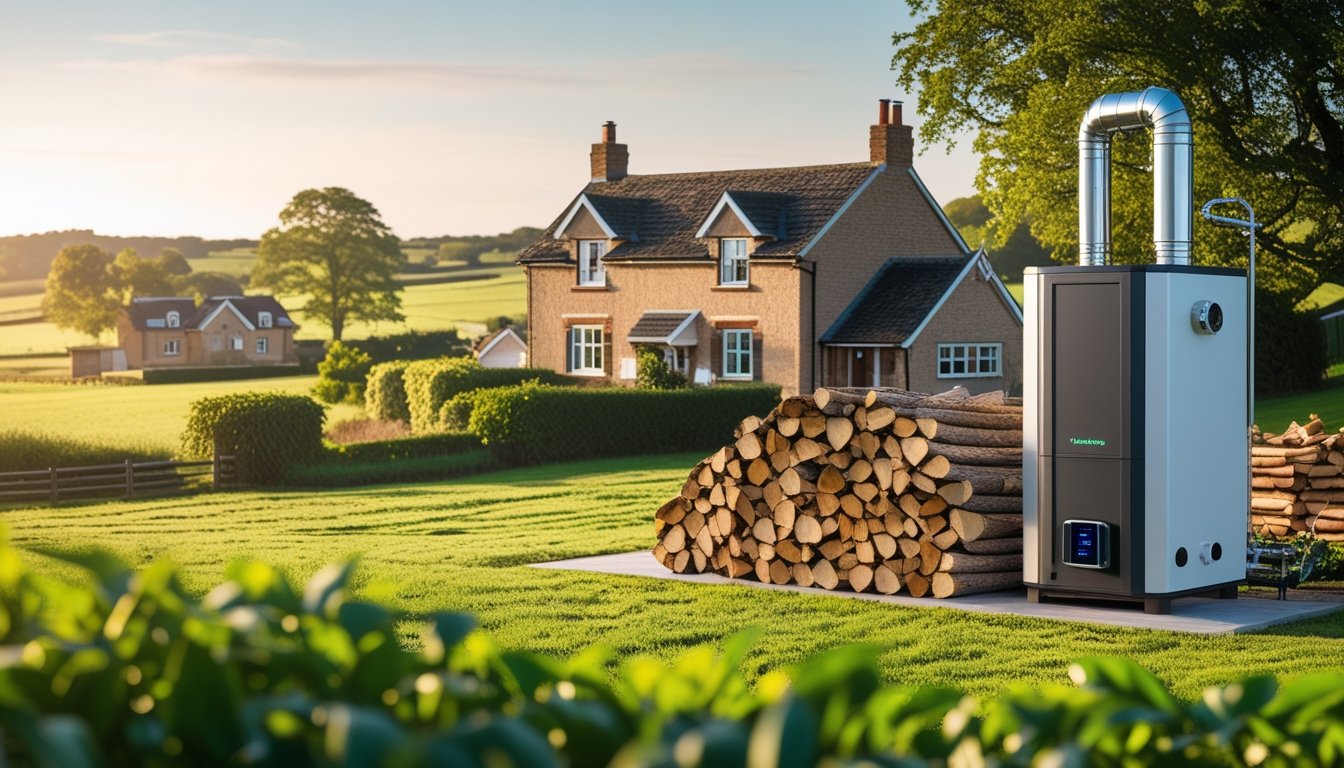
Biomass energy isn't just environmentally friendly; it also supports local economies and job creation in the sustainable energy sector. By utilising locally sourced materials, rural homeowners contribute to reducing carbon emissions while enjoying reliable heating.
While biomass energy presents an exciting opportunity, there are considerations such as installation costs and fuel sourcing. Government incentives and advancements in technology continue to make biomass options more accessible to rural communities.
Key Takeaways
- Biomass energy offers an eco-friendly heating solution for rural homes.
- It supports local economies and reduces carbon emissions.
- Initial costs and fuel sourcing are key considerations.
Key Benefits Of Biomass Energy For Rural UK Homes
Biomass energy offers a sustainable alternative to traditional heating. It not only contributes to reducing carbon emissions but also provides cost-effective and secure energy options for rural homes.
Lower Carbon Emissions And Climate Impact
Biomass energy represents a shift towards carbon neutrality, as it utilises organic materials such as wood pellets, logs, and wood chips. When used in biomass boilers or stoves, these fuels release carbon dioxide but at a level that is significantly lower than fossil fuels. This is due to the carbon being reabsorbed by growing plants. In this way, biomass supports our broader goal of achieving net-zero emissions. By adopting biomass for central heating, underfloor heating, or with radiators, rural properties can effectively reduce their overall carbon footprint. This aligns with the UK's commitment to improving air quality and tackling climate change.
Cost Savings And Fuel Stability
Investing in biomass heating systems can lead to substantial cost savings for rural households. Unlike oil or gas prices, which can fluctuate dramatically, the cost of biomass fuels like wood pellets tends to be more stable. This promotes financial predictability, crucial for managing household budgets in rural settings. Additionally, the abundance of local resources means reduced transportation costs compared to other energy sources. Biomass boiler installations may involve initial expenditure; however, the long-term savings on heating costs can be significant. By switching to biomass, rural UK homes can enjoy both short-term and long-term economic benefits.
Energy Security And Independence
Biomass energy enhances energy security, particularly in rural areas that may not have access to reliable grid connections. By utilising locally sourced biomass, such as agricultural residues or energy crops, communities can reduce dependence on imported fuels. This fosters energy independence and resilience against supply disruptions. The use of domestic biomass allows for sustainable sourcing, contributing to local economies. As rural properties harness these resources, they benefit from increased self-sufficiency. By prioritising biomass, we not only support the environment but also champion localised energy solutions.
Efficiency And Practical Heating Solutions
Biomass boilers and stoves offer efficient heating solutions that cater to the unique needs of rural homes. These systems are designed to work with various fuel types, including wood pellets, wood chips, and logs, enhancing their versatility. Modern biomass boilers boast high efficiency levels, ensuring optimal energy use. They can be integrated with existing central heating systems, including radiators and underfloor heating, providing a seamless transition to sustainable heating. While emissions such as particulate matter are lower than traditional systems, regular maintenance of biomass systems helps keep them minimal. By choosing biomass, rural households can enjoy reliable and practical heating, tailored to their specific environment.
Considerations, Incentives And Future Potential
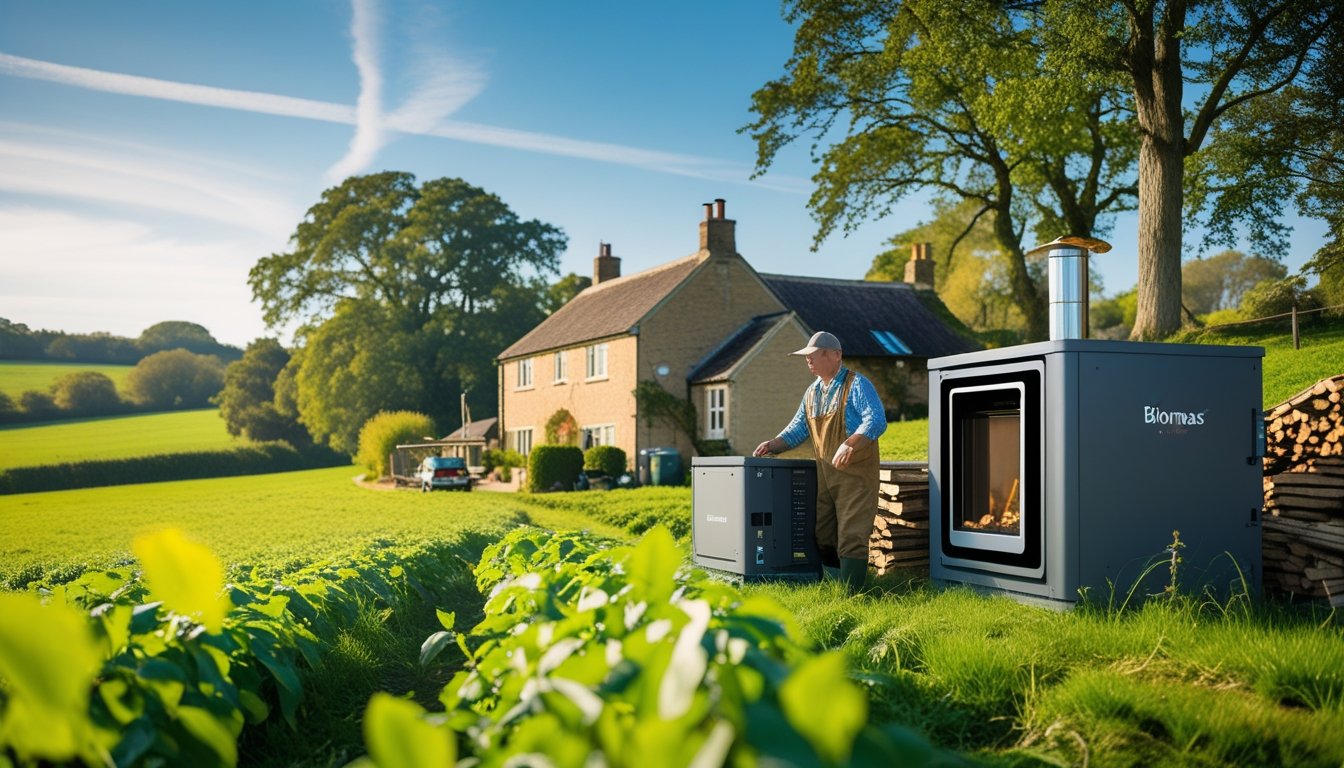
Balancing cost, sustainability, and technological innovation is fundamental when considering biomass energy for rural UK homes. We explore the financial implications and support mechanisms available, the importance of sustainable fuel sourcing, and the potential impact as technologies continue to evolve.
Upfront Costs And Financial Support
Initial investment in biomass energy systems can be significant, especially when compared to traditional fossil fuel boilers. While commercial biomass boilers and district heating systems may come with higher upfront costs, government assistance like the Boiler Upgrade Scheme and the Renewable Heat Incentive (RHI) can help ease the financial burden. These incentives offer homeowners grants to offset installation costs, making biomass more accessible.
Adopting biomass energy not only reduces reliance on the grid but also provides greater energy independence for rural residents. This increased self-sufficiency could lead to long-term savings, despite the initial expense. It's vital to weigh these cost-saving subsidies and incentives against the future benefits of reduced energy bills and lower carbon emissions.
Sustainable Fuel Supply And Environmental Responsibility
The sustainability of biomass as an energy source depends on responsible sourcing of materials like energy crops, agricultural residues, and forestry by-products. By ensuring these resources are harvested sustainably, we can mitigate environmental impact and maintain biomass's status as a renewable energy source. The Climate Change Committee underscores the importance of using these resources without contributing to deforestation or habitat destruction.
Bioenergy with Carbon Capture and Storage (BECCS) offers potential for achieving negative emissions, by capturing and storing the carbon produced during energy generation. Companies like Drax are pioneering these methods, promoting biomass’s role in reducing carbon footprints. Maintaining sustainable sourcing and exploring BECCS technologies ensure we can harness biomass responsibly, supporting both local ecosystems and global climate goals.
Emerging Technologies And Long-Term Role In Rural Decarbonisation
As technologies like anaerobic digestion, biogas production, and gasification evolve, biomass's role in rural energy landscapes is likely to expand. These processes have the potential to enhance grid stability and supplement intermittent sources like solar and wind, providing a consistent and reliable energy supply.
With advancements in Bioenergy and carbon capture technologies, biomass could significantly contribute to the decarbonisation of the UK energy system. The integration of biofuels and sustainable aviation fuels (SAF) further expands biomass's potential applications. As we continue to develop these technologies, rural areas may become showcases for the effective blending of renewable resources, paving the way for widespread adoption beyond rural settings.
Frequently Asked Questions
As we explore biomass energy, we address common questions about its role and impact on rural UK homes. Topics we cover include cost savings, environmental effects, and fuel options.
What advantages do biomass heating systems offer to rural households in the UK?
Biomass heating systems provide rural homes with eco-friendly solutions. They are designed to reduce dependency on fossil fuels, leading to a cleaner environment. With suitable space for installation, such heating systems can also enhance property value due to their sustainable nature.
How does the use of biomass influence energy bills for rural homes?
Utilising biomass for heating can significantly lower energy bills. As wood pellets and chips are often cheaper than oil or electricity, homeowners experience direct savings. Financial predictability improves too, as biomass prices have historically been more stable than fossil fuels.
Can biomass energy lead to reduced carbon emissions for rural residences?
Yes, biomass can greatly reduce carbon emissions. When compared to conventional heating methods, burning biomass results in much lower CO2 output. The carbon released during biomass combustion is offset by the carbon absorbed during the growth of the source material.
What are the incentives for rural UK homeowners to install biomass boilers?
Government incentives, such as the Renewable Heat Incentive (RHI), provide financial support to those opting for biomass systems. By reducing upfront costs, these incentives make the switch to biomass more accessible. Additionally, long-term energy savings further incentivise adoption.
How reliable is biomass energy as a primary heating source for rural homes?
Reliability is one of biomass energy’s strongest attributes. Well-maintained systems offer consistent heating, particularly during peak demand seasons. The availability of diverse biomass fuels also ensures a steady supply, supporting continuous usage.
What types of biomass fuels are readily available for rural households in the UK?
Rural homes have access to a variety of fuels, including wood pellets, wood chips, and logs. These options cater to different boiler types and homeowner preferences. The accessibility and diversity of these fuels make them practical for widespread use in rural settings.